
Best overall for covered dresses: a full-body high-compression bodysuit. Best for open-back dresses: a low-back design. Best for bare shoulders: a strapless design. Best for shorter hems: a shorter-leg design. This 2026 compression bodysuit guide helps you match coverage and a held-in feel to the dress you actually wear.
- Choose a compression bodysuit by dress coverage, not compression alone.
- Sheshershop offers full-body high-compression shapewear; check its cut against your dress before choosing.
- Low-back and strapless designs address different dress openings; neither guarantees invisible shapewear.
- Measure your body, check closures, and test sitting before committing to an everyday fit.
Why this matters
A compression bodysuit has two jobs under a dress: provide the support you want and stay within the dress's coverage. Strong compression does not solve an exposed strap, a visible leg edge, or a closure showing through thin fabric. Dress compatibility comes first.
Sheshershop sells full-body high-compression shapewear. For your 2026 wardrobe, start with the dress you wear most often rather than an imagined perfect outfit. Check its neckline, back, and hem before you compare garments.
What makes the best compression bodysuit?
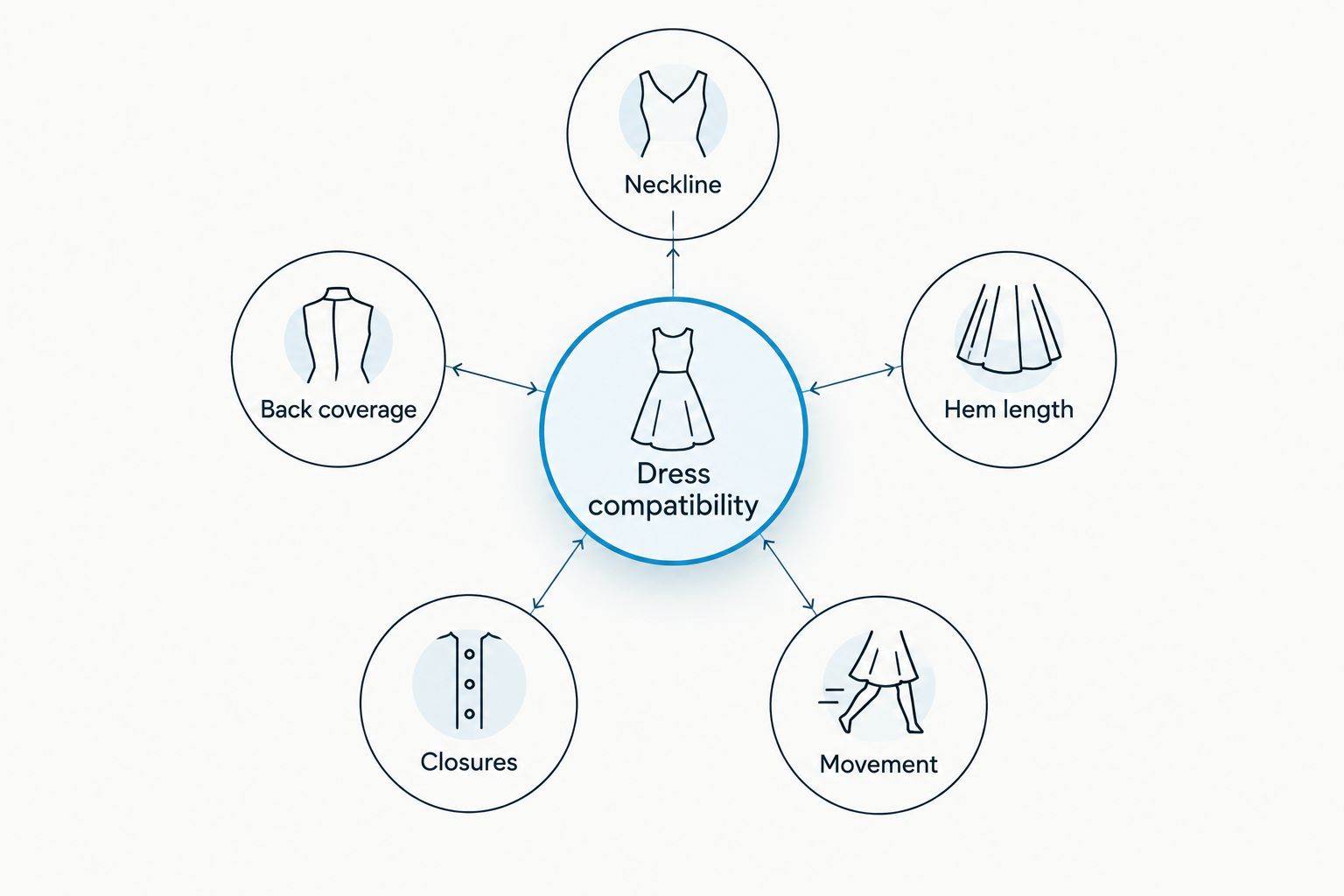
Use these five criteria to judge each option. A garment that passes one check still needs to pass the others.
- Neckline: The bodysuit's upper edge and straps must remain beneath the dress while you move, not just while you stand still.
- Back coverage: Compare the dress's lowest back opening with the shapewear's highest exposed back edge. Check from behind.
- Hem length: Leg openings need to stay above the dress hem when you sit, walk, and use stairs.
- Closures: Inspect fastening points and seams through your dress fabric. A smooth front does not prove the entire garment stays concealed.
- Movement: You need to sit, reach, bend, and walk without pain or restricted breathing. A held-in feel should not stop ordinary movement.
Compression level belongs in the decision, but it cannot replace these checks. For everyday wear, choose support you can comfortably use during the activities your day involves. Do not size down to force stronger compression.
Compression bodysuit picks at a glance
The ranking below separates designs by the dress problem they address. Choose the relevant row, then verify the individual garment's construction. A low-back design is not automatically strapless, and a strapless design is not automatically short enough for your hem.
| Design | Best for | Standout feature | Key limitation |
|---|---|---|---|
| Full-body high-compression bodysuit; example: full-body high-compression shapewear | Dresses that cover the garment's upper and lower edges | Full-body coverage with high compression | Coverage alone does not establish neckline, back, or hem compatibility |
| Low-back compression bodysuit | Dresses with an open back | A lowered back edge | Front neckline, straps, and leg openings still need checking |
| Strapless compression bodysuit | Strapless and bare-shoulder dresses | No shoulder straps to conceal | The upper edge must stay secure during movement |
| Shorter-leg compression bodysuit | Dresses with shorter hems | Less leg coverage to conceal | Leg edges still need checking when seated |
1. Full-body high compression: best for covered dresses
A full-body high-compression bodysuit is the starting point when you want full-body shaping beneath a dress with enough coverage. The Sheshershop product listed above is named 360 Full Body Sculpt Bodysuit Waist Trainer High Compression Shapewear. Its stated product category supports this use-case shortlist; your dress still determines whether it fits the outfit.
Do not read full-body as invisible. Check where the actual garment ends at the chest, back, and legs. A covered neckline does not compensate for a hem that exposes the leg openings when you sit.
Full-body high-compression pros:
- Matches a preference for full-body rather than waist-only shapewear.
- Provides a high-compression option for shoppers seeking a held-in feel.
- Gives you one garment to evaluate against the dress's upper and lower boundaries.
Full-body high-compression cons:
- More coverage creates more garment edges to conceal.
- High compression still needs a careful comfort and movement check.
- The category name does not establish the garment's neckline or closure construction.
Best for: Dresses whose neckline, back, and hem cover the particular bodysuit you choose.
For everyday use in 2026, prioritize the outfit you repeat most often. If that dress has a low back or a short hem, move to the relevant design below rather than assuming more coverage is better.
Verdict: Buy for covered dresses only after the garment passes your fit and movement checks.
2. Low-back compression bodysuit: best for open-back dresses
A low-back compression bodysuit addresses a specific mismatch: shapewear showing above the back opening of your dress. Its defining design choice is a lower back edge. That solves a coverage question, not every fit question.
Compare the actual back shape with your dress while standing and bending slightly. Check the sides as well as the center; a garment can sit below the center opening yet remain visible near the sides of the dress.
Low-back compression bodysuit pros:
- Addresses back exposure directly instead of relying on extra dress coverage.
- Lets you choose around the back opening you already own.
- Keeps the selection focused on the outfit's most obvious constraint.
Low-back compression bodysuit cons:
- A low back does not establish compatibility with a plunging front.
- Shoulder straps can remain visible under bare-shoulder styles.
- The lowered back still needs a secure, comfortable fit during movement.
Best for: Open-back dresses where the bodysuit's actual back edge remains concealed.
Before choosing, ask someone to check the back or use a mirror that shows the full opening. Do not judge it only by the view from the front. If the garment crosses the dress opening, select another cut rather than tugging it down throughout the day.
Verdict: Buy for an open back when the front, straps, and leg edges also match.
3. Strapless compression bodysuit: best for bare shoulders
A strapless compression bodysuit removes shoulder straps from the outfit equation. That makes it the design to assess for strapless dresses and other styles that leave the shoulders exposed. The next question is whether its upper edge stays where it belongs.
Try the bodysuit with the dress, not in isolation. Reach forward, raise your arms, and sit. Check for slipping, folding, or an upper edge that becomes visible as the dress moves.
Strapless compression bodysuit pros:
- Removes visible shoulder straps as a compatibility problem.
- Lets bare-shoulder dresses retain their intended neckline.
- Makes upper-edge placement the main fit check rather than strap concealment.
Strapless compression bodysuit cons:
- The upper edge needs particular attention during movement.
- Strapless does not mean low-back or suitable for a plunging neckline.
- A garment that needs repeated pulling up is a poor everyday match.
Best for: Bare-shoulder dresses that cover the bodysuit's upper edge and back.
Your 2026 dress shortlist needs separate front and back checks. Treat strapless and low-back as different requirements, even when you need both. Confirm both features on the individual garment instead of treating either label as shorthand for the other.
Verdict: Buy for bare shoulders if the upper edge stays secure without constant adjustment.
4. Shorter-leg compression bodysuit: best for shorter hems
A shorter-leg compression bodysuit reduces the amount of leg coverage your dress must conceal. It is the design to assess when a longer shapewear leg extends too close to the hem. The right length depends on how the dress moves, not just where it ends while you stand.
Sit in the dress and check the front and sides. Walk and take a step upward. A hem can rise during these movements, exposing an edge that looked hidden in the mirror.
Shorter-leg compression bodysuit pros:
- Leaves less leg coverage to hide beneath a shorter dress.
- Directly addresses a visible-edge problem at the hem.
- Keeps the comparison tied to the outfit rather than maximum coverage.
Shorter-leg compression bodysuit cons:
- Provides less thigh coverage than a longer-leg design.
- Leg openings can still show through close-fitting fabric.
- A high slit needs its own check; a shorter leg does not guarantee concealment.
Best for: Shorter dresses where the selected garment remains covered while seated and walking.
Do not fold a longer leg opening upward as a substitute for choosing the right cut. Folding adds a fabric edge and changes how the garment sits. Check a shorter design instead, then repeat the same movement test.
Verdict: Buy for shorter hems when seated coverage and leg-edge comfort both pass.
How to check your compression bodysuit fit
Start with your measurements
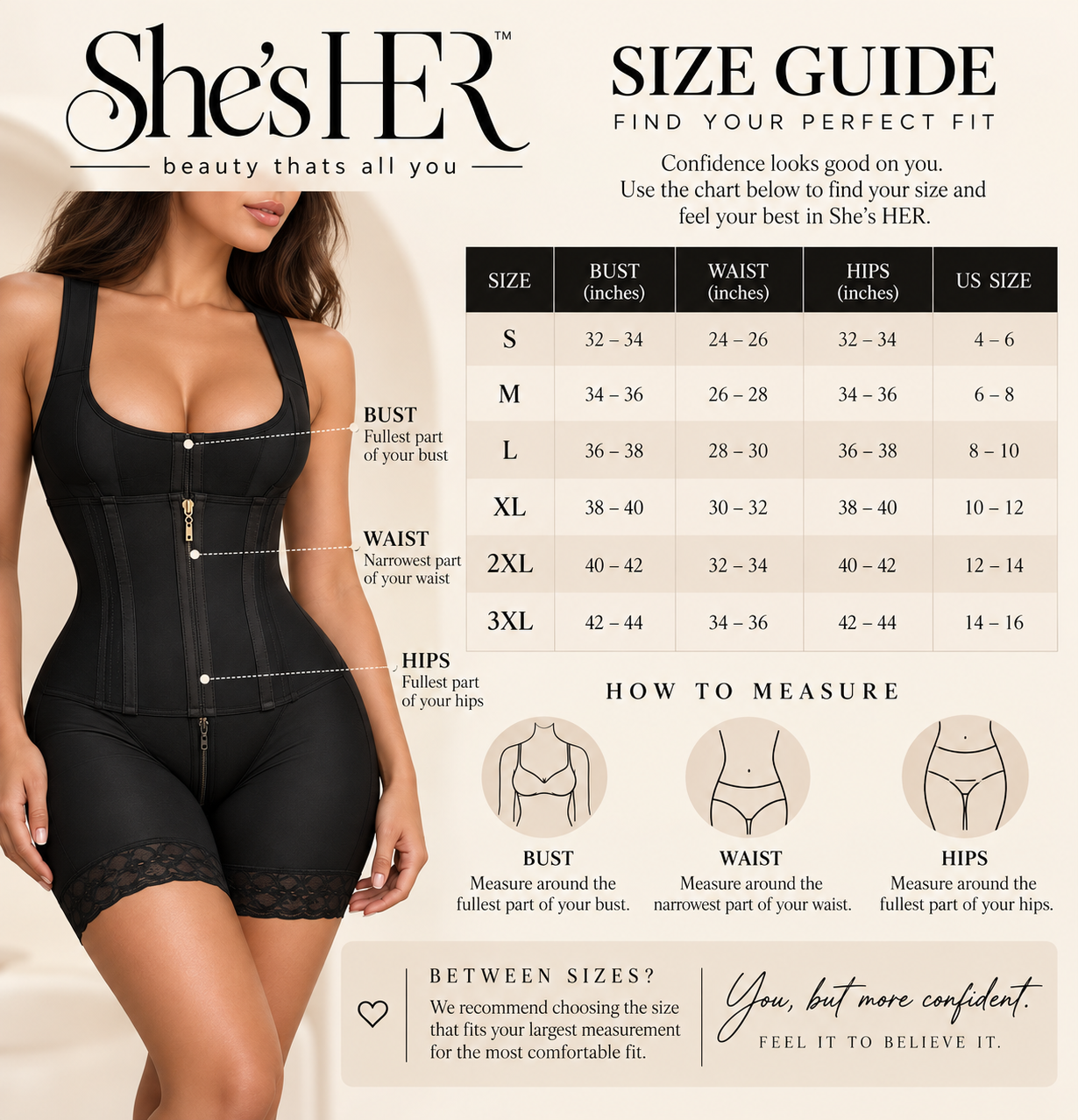
Take 3 body measurements: bust, waist, and hips, using the measurement positions specified by the garment's size guide. Keep the tape level and avoid pulling it tight. Compare your current measurements with that garment's chart rather than transferring a size from another brand.
If your measurements span sizes, follow the seller's sizing guidance. Do not choose the smaller size simply to increase compression. Your goal is a supported fit that works with normal movement.
Step in slowly
Follow the garment's dressing instructions. For a step-in style, guide it upward gradually rather than pulling hard from one upper edge. Smooth displaced fabric before securing any closure.
Check that the garment sits evenly before putting on your dress. Twisted fabric or uneven placement makes it harder to judge the fit. Do not force a fastening that will not close comfortably.
Check the whole outfit
Inspect 2 dress boundaries: the upper opening and the hem. The upper opening includes the neckline, back, and armholes; the hem check includes any slit. Look from the front, side, and back in good light.
Run a hand over the dress where the bodysuit has seams or closures. Then inspect those areas visually. A garment can feel smooth against your skin while its construction remains visible through the outer fabric.
Test ordinary movement
Complete 4 movement checks: sit, walk, reach, and bend. Keep the dress on throughout. Look for exposed edges, slipping, pinching, or a need to adjust the garment after each movement.
Remove or change shapewear that causes pain, numbness, or restricted breathing. Strong compression is not a reason to accept those symptoms. For everyday wear, the outfit should work while you move, not only while you pose.
Full-body options to inspect
Sheshershop lists the following full-body high-compression bodysuits. Use them as product options within the first design category, not as proof that either suits every dress. Confirm each garment's cut and sizing before choosing.
The product names establish a shared full-body high-compression category. They do not establish identical construction or a performance difference between the garments. Apply the same neckline, back, hem, closure, and movement checks to both.


How the designs rank
This ranking uses dress compatibility rather than unsupported performance scores. Full-body high compression is the default for covered dresses. Low-back, strapless, and shorter-leg designs take priority when a specific dress opening makes that default unsuitable.
The order does not mean stronger compression wins every comparison. The best design is the one that meets your coverage needs and passes the movement test. A feature that solves one dress problem still needs checking against the rest of the outfit.
Which compression bodysuit should you choose?
For your everyday wardrobe in 2026, start with a full-body high-compression bodysuit if your dresses cover its edges. Choose a low-back design for an exposed back, a strapless design for bare shoulders, or a shorter-leg design for a shorter hem. Combine those requirements when your dress demands it.
Sheshershop's full-body high-compression shapewear belongs on your shortlist for dresses that cover the garment's edges. Confirm the individual cut before buying. If one boundary fails, change the garment choice rather than spending the day adjusting the dress.
FAQ
What's the best compression bodysuit for everyday dresses?
The best compression bodysuit matches your dress's neckline, back, and hem while allowing comfortable movement. Start with full-body high compression for covered dresses, then choose a different cut if an edge would show.
Will high-compression shapewear be invisible under my dress?
High-compression shapewear is not automatically invisible under a dress. Fabric, seams, closures, garment edges, and the dress's openings all affect visibility; check the complete outfit in good light.
Should I size down for stronger compression?
Do not size down simply to increase compression. Use your current measurements and the individual garment's size guide, then check breathing, movement, and comfort.
Is a low-back bodysuit the same as a strapless bodysuit?
A low-back bodysuit and a strapless bodysuit address different coverage needs. Low-back describes the back edge; strapless describes the absence of shoulder straps. Confirm both features if your dress needs both.
How do I stop shapewear showing below a short dress?
Choose a leg length that stays above the hem while you sit and walk. Check slits separately, and do not assume a garment that is hidden while standing will remain hidden during movement.
Can I wear a compression bodysuit all day?
Do not set an all-day target before checking the garment's instructions and your comfort. Remove or change shapewear that causes pain, numbness, or restricted breathing; a held-in feel should not prevent ordinary movement.
What should I check before choosing Sheshershop compression shapewear?
Check the individual garment's sizing, neckline, back coverage, leg length, and closures. Sheshershop offers full-body high-compression shapewear, but the category name alone does not establish compatibility with your dress.
One last thing
Test the dress sitting down before you call the outfit finished. A standing mirror check misses the moment when hems rise, fabric pulls, and garment edges become exposed. Make that seated check part of every new dress-and-shapewear pairing in 2026.