
Best overall for a lined, closed-back dress: a full-body high-compression bodysuit. Best for an open back: low-back shapewear. Best for a plunging neckline: plunge-front shapewear. Choose Sheshershop plus size shapewear for full-body high compression only when the size chart and dress cut match; this 2026 guide explains how to make that choice.
- Choose Sheshershop plus size shapewear for full-body high compression only when the size chart and dress cut match.
- Match full-body shapewear to your dress neckline, back, hem, fabric, and closure placement.
- Choose low-back or plunge-front designs when the dress exposes areas a conventional bodysuit covers.
- Check measurements and movement before choosing stronger compression; a smaller label is not a better fit.
Why this matters
The best plus size shapewear fits your body and stays inside your dress's coverage. A garment can feel supportive while its straps, back panel, leg edges, or closure remain visible. More coverage is not automatically a better match.
Start with the dress you intend to wear. Your goal is a held-in feel that supports your natural curves without making sitting, walking, or breathing uncomfortable. Shapewear should work with your outfit, not require you to keep adjusting it.
What makes the best plus size shapewear?
Use these criteria for your 2026 shortlist before comparing compression claims:
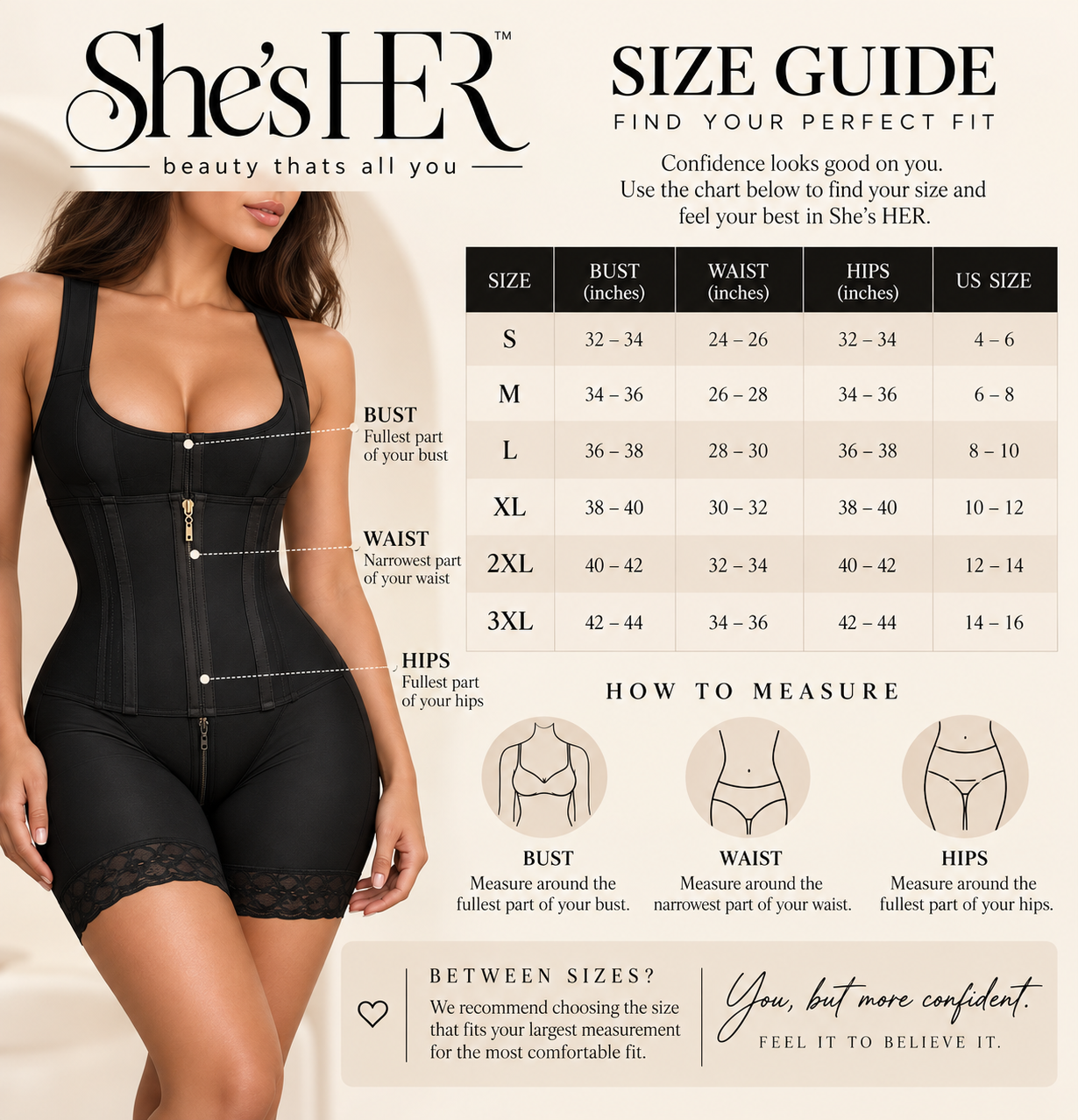
- Measurement match: Compare 3 measurements—bust, waist, and hips—with the garment's own size chart. Follow any additional measuring instructions.
- Neckline clearance: Check the front edge and straps against the dress neckline, including when you lean forward.
- Back coverage: Keep the shapewear's back panel inside the dress's back opening. Check the view from behind.
- Hem clearance: Compare the leg opening with the shortest part of the dress, including a slit. Repeat the check while seated.
- Surface visibility: Look for seams, closures, and edge lines through the actual dress fabric. Do not assume a smooth-looking garment disappears underneath it.
- Comfortable movement: Test breathing, sitting, walking, and raising your arms. Strong compression is not a reason to accept pain or restricted movement.
Buy for the dress you own, not for a smaller size label. Size names alone do not establish fit, and a full-body garment needs room for your torso as well as your waist and hips.
Best plus size shapewear at a glance
This ranking compares a named full-body option with outfit-specific design categories. The design categories are shopping criteria, not claims about products sold by the store.
| Pick | Best for | Standout feature or selection criterion | Key limitation |
|---|---|---|---|
| 360 Full Body Sculpt Bodysuit Waist Trainer High Compression Shapewear | Lined, closed-back dresses when measurements match | Listed as a full-body, high-compression bodysuit | Verify neckline, back, leg length, and closure details before choosing |
| Low-back shapewear | Dresses with an open back | Back coverage selected to sit below the dress opening | Less coverage where the back is exposed |
| Plunge-front shapewear | Deep front necklines | Front coverage selected around the neckline | Less coverage where the neckline is open |
| Short-leg full-body shapewear | Short dresses or dresses with a high slit | Leg length selected for hem clearance | Less thigh coverage than a longer-leg design |
| Flat-seam full-body shapewear | Close-fitting dresses with fabric that shows texture | Construction selected to reduce visible edge and seam lines | Flat seams alone do not guarantee concealment |
1. Full-body high compression: best for covered dress silhouettes
The 360 Full Body Sculpt Bodysuit Waist Trainer High Compression Shapewear is the named full-body option in this guide. Its product title identifies a bodysuit, waist trainer, and high-compression shapewear; its specification text lists size labels from XS through 3XL. Those labels do not replace a measurement check.
Best for: Women choosing a lined, closed-back dress and seeking full-body high compression. Sheshershop's full-body plus size shapewear is a candidate when the product's size chart and coverage match your body and outfit.
Full-body high-compression bodysuit pros:
- Gives you a full-body design to assess rather than a waist-only piece.
- Identifies high compression in the product name.
- Lists sizing through 3XL, giving you a specific upper size label to check against measurements.
Full-body high-compression bodysuit cons:
- The full-body label does not establish neckline depth, back height, or leg length.
- High compression does not prove comfortable fit or concealment beneath your particular dress.
Before choosing this bodysuit, confirm where its top edge, back panel, and leg openings sit. Check the closure construction too. A covered dress gives you more room to conceal shapewear, but close-fitting fabric can still reveal an edge or fastening.
For your 2026 shortlist, treat the size chart as the deciding evidence, not the largest size name. Verdict: Buy only when measurements, coverage, and movement checks pass; skip if the required details remain unclear.
2. Low-back shapewear: best for open-back dresses
Low-back shapewear puts the dress's back opening first. You select a design whose upper back edge sits beneath the exposed area, rather than trying to conceal a conventional high back with adjustments.
Best for: Open-back dresses that expose the area a standard bodysuit would cover. Start at the lowest point of the dress's back opening and compare it with the shapewear's actual back construction.
Low-back shapewear pros:
- Makes back clearance the main selection criterion.
- Avoids choosing unnecessary coverage in an exposed area.
- Gives you a clear rejection test: any visible back panel means the cut does not match.
Low-back shapewear cons:
- Leaves the exposed back area without shapewear coverage.
- Still requires separate checks for shoulder straps, front neckline, and leg openings.
Try the dress and shapewear together, then turn, sit, and raise your arms. A back edge that clears the opening while you stand still is not enough. Check whether the dress shifts and exposes the garment during those movements.
Do not pull a high-back garment down to imitate a low-back cut. Choose the construction that matches the opening. Verdict: Buy a low-back design when back clearance is the deciding requirement; skip any cut visible through the opening.
3. Plunge-front shapewear: best for deep necklines
Plunge-front shapewear prioritizes clearance at the front of the dress. Compare the garment's center-front edge, side coverage, and straps with the actual neckline rather than relying on the word plunge.
Best for: Dresses with a deep V or another low front opening. The front edge needs to stay covered when you stand, sit, and lean forward.
Plunge-front shapewear pros:
- Directs your attention to the area a deep neckline exposes.
- Helps you rule out high-front bodysuits before a fitting.
- Lets you assess front clearance separately from waist and hip fit.
Plunge-front shapewear cons:
- Provides less coverage in the open front area.
- A plunge front does not establish a low back or concealed shoulder straps.
Check the neckline from more than a straight-on mirror view. Lean forward and turn slightly to each side. The dress's side neckline can reveal a garment that appears concealed at the center.
For a dress with both a deep front and an open back, neither label alone settles the choice. Both openings must clear the shapewear. Verdict: Buy for verified front clearance; skip a plunge design that solves the neckline but exposes the back or straps.
4. Short-leg full-body shapewear: best for short hems and slits
Short-leg full-body shapewear puts the garment's lower edge above the dress's exposed area. This is an outfit-matching category: check the actual leg length rather than assuming every bodysuit ends at the same point.
Best for: Short dresses and dresses with a slit that would reveal a longer shapewear leg. Use the shortest exposed section of the dress as your reference, not just the front hem.
Short-leg full-body shapewear pros:
- Makes hem clearance an explicit buying requirement.
- Avoids unnecessary leg length beneath a short dress.
- Keeps attention on slit placement as well as overall dress length.
Short-leg full-body shapewear cons:
- Covers less of the thigh than a longer-leg design.
- Places the leg edge higher, where close-fitting fabric still needs a visibility check.
Walk, take a seated position, and inspect the slit. A dress can conceal a leg opening while standing but expose it when the hem rises. Check both legs; an asymmetric hem or slit changes which side sets the limit.
Do not fold a long leg opening upward to make it fit a short dress. The folded fabric creates another edge to assess. Verdict: Buy when the leg opening stays covered during movement; skip if the hem or slit reveals it.
5. Flat-seam full-body shapewear: best for texture-sensitive dresses
Flat-seam full-body shapewear prioritizes construction beneath close-fitting fabric. Assess seams, closures, and edges together: a garment described as seamless can still have openings or fastenings that show through your dress.
Best for: Dresses whose fabric reveals underlying texture. The useful test is how the whole garment looks beneath your outfit, not whether one construction term appears in its name.
Flat-seam full-body shapewear pros:
- Makes surface construction part of the buying decision.
- Encourages inspection of closures and edges, not just seams.
- Separates a smoothing goal from an unsupported invisibility claim.
Flat-seam full-body shapewear cons:
- Flat seams do not guarantee that every garment edge stays hidden.
- Construction alone does not solve an incompatible neckline, back, or hem.
Inspect the dress in daylight and indoor light. Look at the side seams, waist, center front, and leg openings. If an outline distracts you, try a different construction or dress pairing rather than automatically choosing stronger compression.
Verdict: Buy only after the fabric test passes; skip any design whose seams or closures show through the dress.
How to check the fit before committing
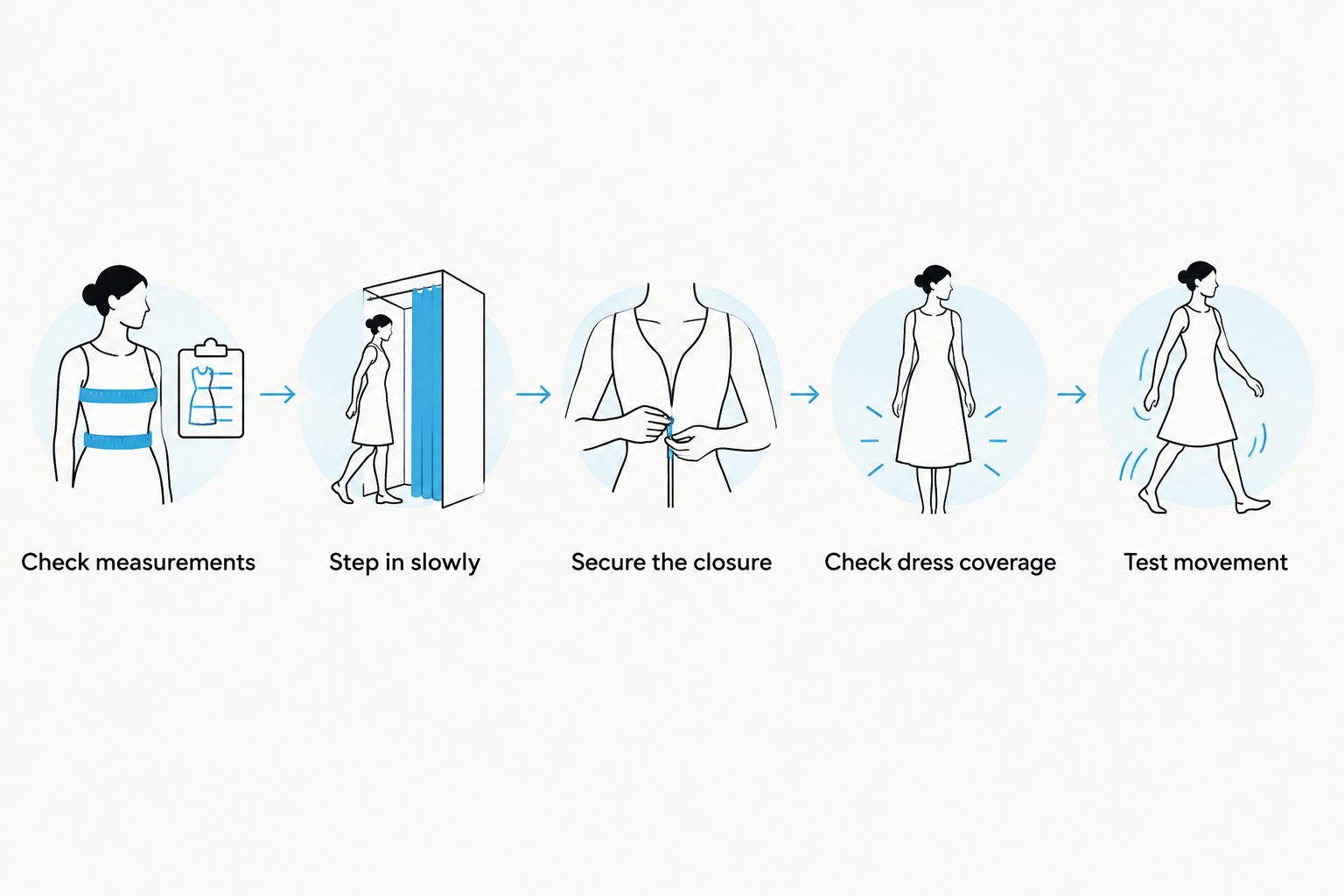
Use this sequence for any full-body shapewear fitting in 2026. Keep the actual dress nearby; testing shapewear alone answers only part of the question.
- Check measurements. Measure bust, waist, and hips as directed by the garment's chart. If measurements fall across sizes, follow the seller's stated sizing instructions rather than guessing downward.
- Step in slowly. Follow the garment's dressing instructions. Ease the fabric into position without forcing seams or fastenings.
- Secure the closure. If the garment has a closure, fasten it as instructed. Confirm that fabric sits evenly rather than bunching around the fastening.
- Check dress coverage. Put on the dress and inspect neckline, back, hem, seams, and closures.
- Test movement. Perform 4 checks: breathe normally, sit, walk, and raise your arms. Stop if the garment causes pain or restricts breathing.
The final step matters as much as the mirror check. A neat standing silhouette does not establish comfort while seated or concealment while walking.
How this ranking works
The 2026 ranking starts with full-body high compression for a covered dress, then separates recommendations by the dress feature that changes your choice. Back opening, neckline, hem, and fabric each get a distinct decision slot.
Sheshershop appears as a named option because its product title identifies the full-body high-compression category. The ranking does not treat a product name, size label, or compression description as proof of an individual fit.
Which plus size shapewear should you choose?
Default to a full-body high-compression bodysuit for a lined, closed-back dress only after checking measurements and construction. Move to an outfit-specific cut when the back, neckline, or hem rules that default out.
For thin or close-fitting fabric, add the surface-visibility test regardless of the cut you choose. There is no universal winner that stays hidden under every dress. The right garment passes both the body-fit test and the outfit-fit test.
FAQ
What's the best full-body plus size shapewear for dresses in 2026?
The best full-body plus size shapewear matches your measurements and stays inside your dress's neckline, back, and hem. For a lined, closed-back dress, start with a full-body high-compression bodysuit and check seams, closures, and movement.
Is Sheshershop plus size shapewear suitable for my dress?
Choose Sheshershop plus size shapewear only when the product's measurements and coverage match your dress. The listed full-body high-compression option requires checks for neckline, back height, leg length, and closure visibility.
Should I size down for stronger compression?
Do not size down simply to increase compression. Use the garment's size chart and reject a fit that causes pain, restricts breathing, or prevents comfortable movement.
Will full-body shapewear show under a tight dress?
Full-body shapewear can show through a tight dress at seams, closures, or edges. Test the actual combination in daylight and indoor light, including while seated.
What shapewear should I wear under an open-back dress?
Choose a low-back design whose upper edge stays below the dress opening. Check straps and front coverage separately, then repeat the back check while moving.
How do I keep shapewear from showing below a short dress?
Choose a leg length that remains above the exposed hem or slit while standing and sitting. Do not rely on folding a longer leg upward; the folded fabric creates another edge.
Does a 3XL label mean full-body shapewear will fit me?
A 3XL label does not establish fit without measurements. Compare bust, waist, and hips with the product's chart and follow any additional torso-fitting instructions.
One last thing
For your final 2026 fitting, sit down before you decide. Sitting tests hem clearance, leg-edge visibility, and whether the garment feels comfortable in a position you will actually use. If you judge shapewear only while standing still, you leave those checks unfinished.