
Choose shapewear for a satin dress by matching the garment’s neckline, back coverage, and leg length to your dress, then checking whether seams, edges, or closures show through the fabric. For your 2026 outfit, choose firm compression only when it provides comfortable support without interrupting the dress’s drape; smoothing is temporary while you wear the garment, not permanent reshaping.
- Choose shapewear for satin dress outfits by dress coverage first, compression second.
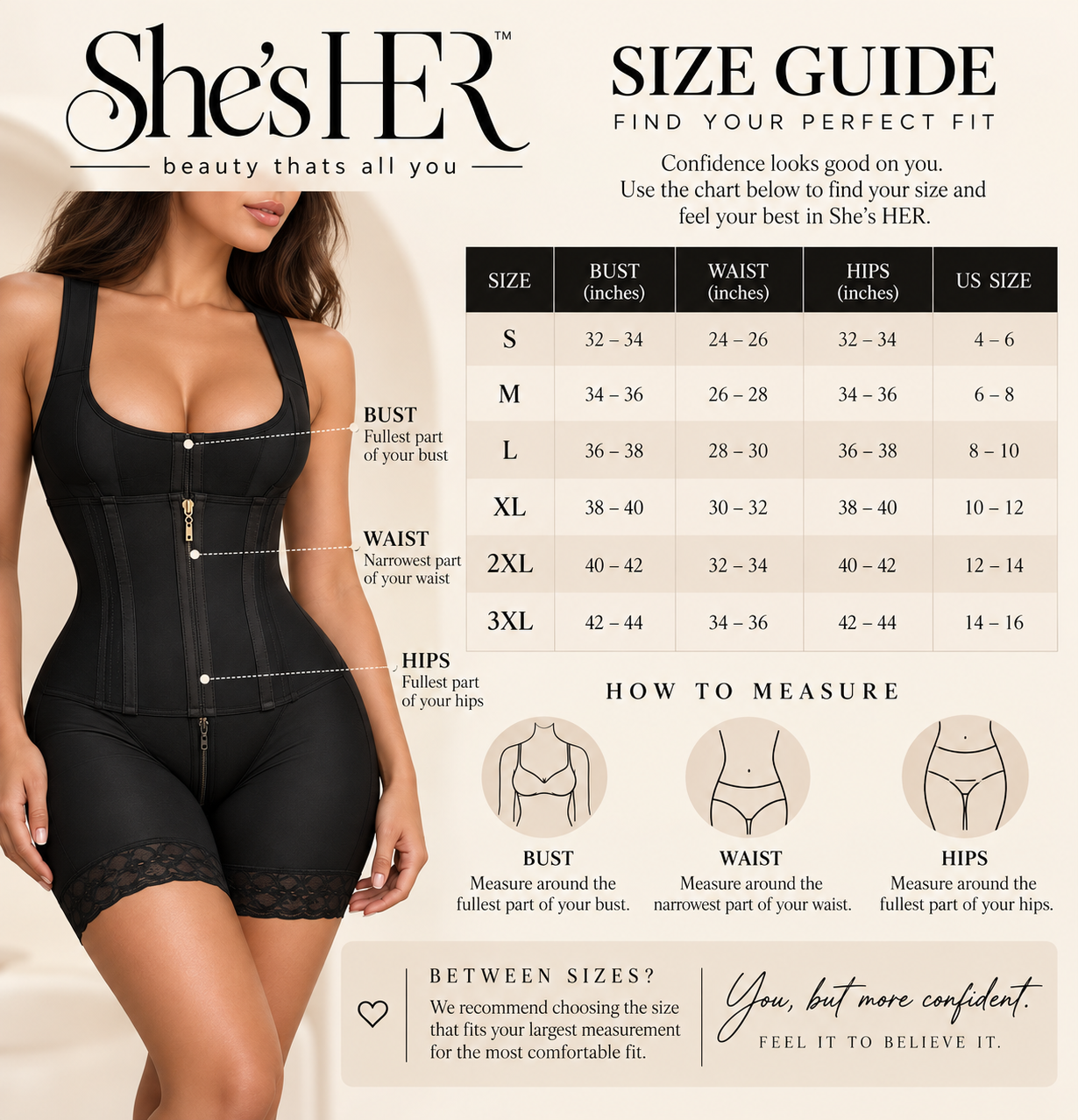
- She's HER offers firm full-body shapewear; satin compatibility still requires an outfit-specific fit check.
- Check neckline, back coverage, hem length, seams, and closures before committing to a garment.
- Keep the shapewear only if you can sit, walk, and breathe comfortably in the complete outfit.
Why this matters
The best shapewear is the garment that works with your dress, not the one that feels tightest. Satin’s reflective surface can make underlying edges noticeable, especially where the dress sits close to your body. A garment that looks smooth on its own still needs testing beneath the actual dress.
She's HER offers firm full-body shapewear for women seeking temporary smoothing and support under dresses. The Full Body Sculpt Bodysuit provides firm, all-over compression, but that does not establish compatibility with every satin neckline, back, or hem.
For a satin outfit in 2026, begin with the dress’s cut. Compression comes after coverage and fit, not before them.
How do you choose shapewear for a satin dress?
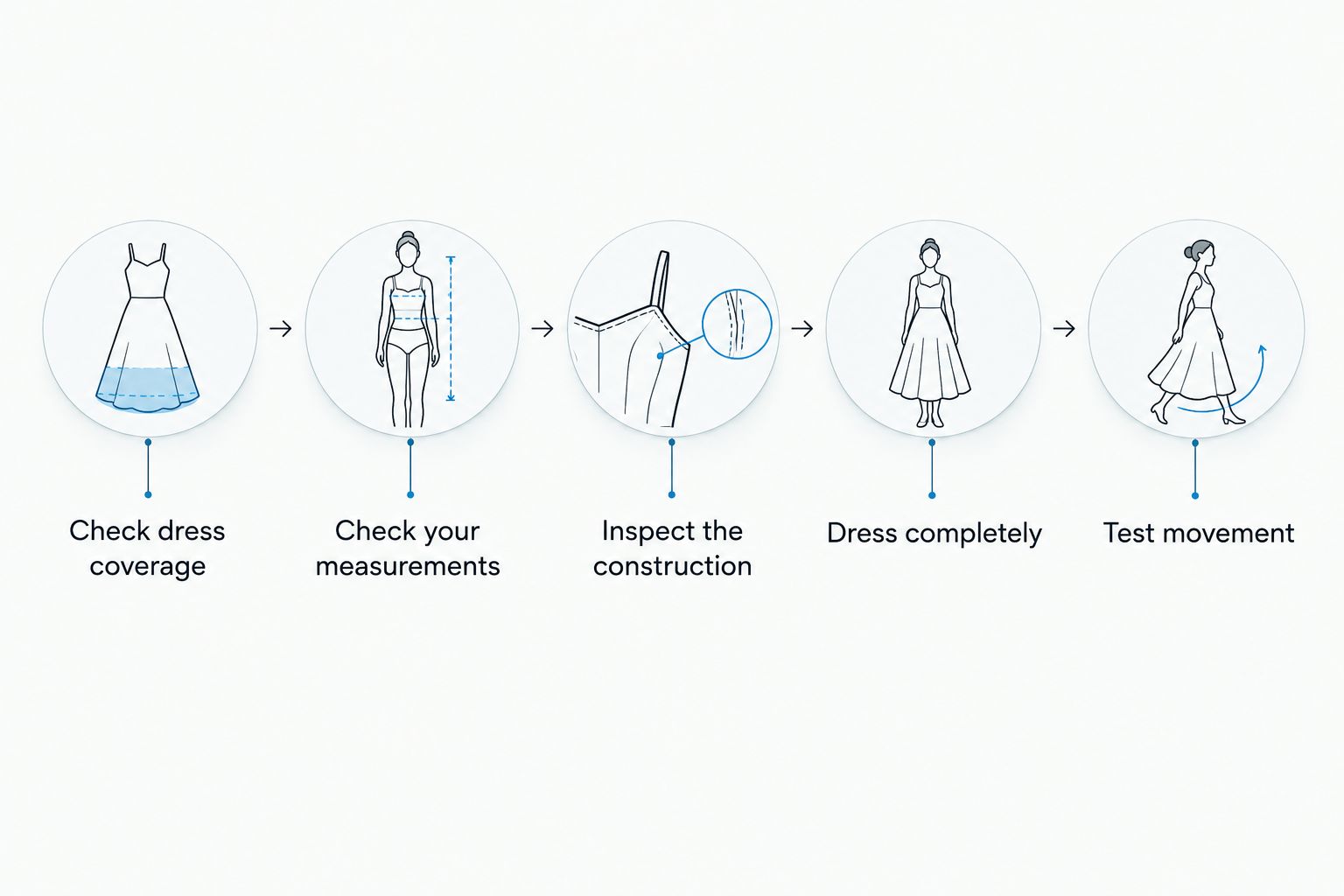
Use the actual dress as your fitting guide. A product photo cannot show how a garment will behave beneath your particular fabric, lining, and cut. Follow this sequence before deciding what to keep.
- Check dress coverage. Identify the lowest point of the neckline, the back opening, the armholes, and any slit. Shapewear needs to remain inside those boundaries during movement, not just while you stand still.
- Check your measurements. Compare your current measurements with the garment’s own size chart. Do not select a smaller size to create extra compression; fit and compression level are separate choices.
- Inspect the construction. Locate seams, leg edges, straps, and any closures before putting on the dress. Notice which details sit beneath close-fitting areas of satin.
- Dress completely. Put on the shapewear, the dress, and any other undergarments you intend to wear together. Separate try-ons do not reveal how the complete outfit behaves.
- Test movement and visibility. Sit, walk, reach, and turn. Check the outfit from the front, side, and back, then reject a combination that exposes edges, restricts comfortable movement, or changes the drape you wanted.
Use the same fitting order for every option you consider in 2026. That makes the comparison about the outfit rather than about which garment promises the strongest hold.
Compare coverage before compression
The options below describe garment cuts, not verified features of any particular product. Use them to decide which shape to inspect first, then confirm the details on the garment you are considering.
| Shapewear option | Best for | Main advantage | Main limitation beneath satin |
|---|---|---|---|
| Full-body compression bodysuit | Dresses that cover the garment’s upper and lower edges | Combines torso coverage and support in one garment | Upper coverage, seams, or leg edges can conflict with the dress |
| High-waisted shaping shorts | Dresses where lower-body coverage matters more than upper-body coverage | Leaves the upper torso free of bodysuit straps | The waistband or leg opening can create a visible boundary |
| Low-back shapewear | Dresses with an exposed back | Places back coverage below the dress opening when the cuts align | A low back alone does not solve neckline or hem compatibility |
| Strapless shapewear | Dresses with exposed shoulders | Avoids shoulder straps | The upper edge still needs a movement and visibility check |
| No shapewear | Outfits where you prefer the dress’s natural drape | Removes an additional layer and its seams | Does not provide added compression or support |
No option wins across every satin dress. Choose the cut that stays covered and feels comfortable, then assess its smoothing effect.
Full-body shapewear: best for covered dress cuts
Full-body shapewear is the first option to inspect when your satin dress covers the garment’s neckline, back, and lower edges. Its appeal is connected coverage: you are choosing one garment for firm support rather than assembling separate shaping layers.
The limitation is equally practical. More coverage creates more boundaries to check, including the upper body and leg openings. A full-body garment is not the right match when the dress exposes those areas or makes its construction visible.
She's HER is best for women seeking firm full-body support under dresses that cover the shapewear. Treat that as a coverage-based recommendation, not a promise of invisibility beneath satin.
These products are relevant to firm full-body support. Their supplied descriptions do not establish the exact neckline, back cut, closure placement, or leg length, so confirm those details before choosing for your dress.


High-waisted shaping shorts: best for lower-body coverage
High-waisted shaping shorts are an option when you want coverage below the waist without adding bodysuit coverage around your shoulders. Check the waistband beneath the dress before judging the result; the transition between covered and uncovered areas matters as much as the fabric over your middle.
The benefit is a simpler upper-body fit. The trade-off is a separate waistband and separate leg edges, each of which needs to remain unobtrusive beneath satin.
If the dress has a slit, walk and sit in it before deciding. A leg opening that stays hidden while standing can become exposed when the skirt moves.
Low-back or strapless shapewear: best for exposed dress details
Low-back and strapless cuts address different dress openings. A low-back garment needs to sit below the back opening, while a strapless garment needs to stay beneath the neckline without shoulder straps appearing.
Their advantage is outfit-specific coverage. Their limitation is that solving one opening does not automatically solve the rest: a compatible back can still come with an incompatible neckline or lower edge.
Match every exposed area, not just the most noticeable one. Check the back while reaching forward and the neckline while sitting, rather than relying on a still mirror view.
Why shapewear visibility varies under satin
Visibility is an outfit problem, not simply a compression problem. Use these factors when a garment feels supportive but still shows beneath your dress.
- Neckline and armholes: The dress must cover the shapewear’s upper edges throughout ordinary movement. Wider or deeper openings leave less room for coverage.
- Back coverage: Compare the lowest exposed point of the dress with the highest visible part of the shapewear. Check from behind, not only from the front.
- Hem length and slits: The shapewear’s lower edge needs to stay covered when the skirt shifts. Sitting and walking reveal conflicts that a standing check misses.
- Seams and closures: Inspect where construction details land beneath fitted satin. A closure beneath a close-fitting panel deserves particular attention.
- Garment fit: A size that feels excessively restrictive is not a shortcut to a smoother outfit. Check for digging edges, bunching, and restricted comfortable movement.
- Dress drape: Judge how the dress falls over the complete underlayer. The desired result is support that works with the dress, not a layer that changes its intended shape.
For your 2026 purchase, use these checks to rule out mismatches before comparing compression claims. A strong hold cannot compensate for an exposed strap or a visible leg opening.
How do you check seams and closures beneath satin?
Check seams and closures with the dress on, in ordinary daylight and the lighting you expect to wear it in. Turn sideways and look at the areas where the satin rests closest to your body. Do not assess only the front of the waist.
A garment described as smooth still has construction details. Look for raised lines, abrupt edges, and places where the dress catches instead of falling freely. If you notice a line, identify the source before changing size.
Change the construction or cut when construction is the problem. Downsizing does not remove a seam, move a closure, or lower a neckline.
Check the lower edge separately
Leg openings deserve their own inspection because they sit beneath a moving skirt. Walk naturally, then sit and stand again. Check whether the dress lifts enough to expose the garment or outlines its edge.
For a close-fitting satin skirt, look from the side as well as the front. Keep the option only when its lower boundary works with the dress during movement.
How should you put on firm shapewear before trying the dress?
Follow the garment’s own dressing instructions first. Step in slowly where its construction permits, ease the fabric into position, and secure any closure as directed rather than pulling hard on straps or edges. Settle the garment before adding the dress.
Check that the fabric lies evenly without folded edges or twisted sections. Adjust those details before judging visibility; a misplaced garment does not give you a useful fit result.
Once dressed, breathe normally and move without forcing your posture. A held-in feel should not require you to tolerate pain, numbness, or difficulty breathing. Remove a garment that causes those symptoms rather than treating them as evidence of effective compression.
Use movement as the final fit check
Begin with standing, then sit in a chair and reach forward naturally. Walk, turn, and check the dress again. Notice whether you keep needing to tug the skirt or adjust the underlayer.
A suitable combination lets you focus on wearing the dress. If maintaining the outfit requires repeated adjustments, reconsider the shapewear cut, its fit, or whether you want compression with that dress at all.
Should you size down for a smoother satin dress?
Use the garment’s size chart, not a smaller size, as your starting point. Deliberately sizing down does not establish a smoother result and can make comfortable movement harder; reassess the cut if the correct size still shows beneath satin.
Is full-body shapewear better than shorts under satin?
Full-body shapewear is better for connected torso coverage when the dress conceals its edges, while shorts suit outfits that need lower-body coverage without upper-body straps. Neither is automatically less visible; compare the actual seams and boundaries beneath your dress.
Can you wear a satin dress without shapewear?
You can wear a satin dress without shapewear. Choose no additional compression when you prefer the dress’s natural drape or when the available garments create more visible boundaries than they resolve.
FAQ
What's the best shapewear for a satin dress in 2026?
The best shapewear for a satin dress in 2026 matches the dress’s coverage and passes a full-outfit movement check. Choose firm full-body support only when its neckline, back, seams, and lower edges work beneath your dress.
Will high-compression shapewear be invisible under satin?
High-compression shapewear is not automatically invisible under satin. Inspect seams, closures, and garment edges beneath the actual dress before deciding.
Is She's HER shapewear suitable for a satin dress?
She's HER shapewear is an option for firm full-body support when the dress covers the garment. Verify the exact cut and test visibility beneath your satin dress rather than assuming universal compatibility.
How do I stop shapewear shorts from showing below a satin dress?
Choose a leg length that remains covered when you walk and sit. Check the slit as well as the hem, because either opening can expose the shapewear.
Should I buy a smaller shapewear size for stronger smoothing?
Choose your size from the garment’s own chart rather than deliberately buying smaller. If the fit creates digging edges or restricts comfortable movement, reassess the size and cut.
What should I check for a low-back satin dress?
Check that the shapewear sits below the dress’s back opening during movement. Then inspect the neckline and lower edges, because a compatible back does not guarantee a compatible outfit.
Does wearing shapewear permanently change my shape?
Shapewear provides temporary smoothing and support while you wear it. It is not a weight-loss method or a promise of permanent reshaping.
One last thing
Compare the outfit with and without shapewear before making the final decision. Use the same dress, lighting, and movements for both checks so you judge the garment’s contribution rather than a different pose.
For your 2026 satin outfit, support is useful only if you like the complete result. Your natural curves do not need correcting; the garment should serve your clothing preferences and comfort.